

Microcement & Lavasteen
in the toilet.
A small space demands calm. No grout lines, no tile edges, no busy patterns — one seamless, matte finish makes a toilet visually larger and cleaner.
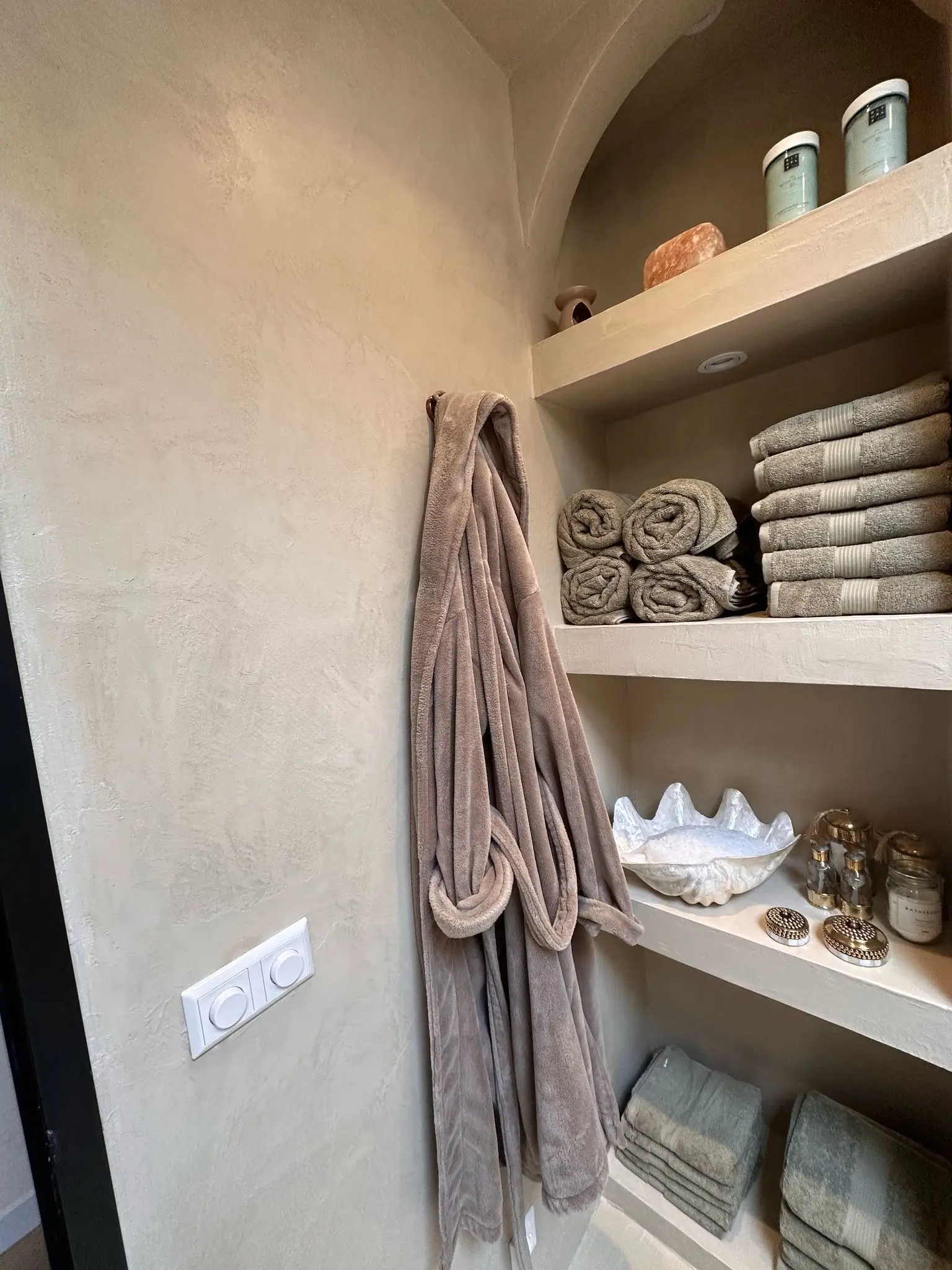
Microcement
A mineral wall finish with a matte concrete look. Matte, seamless, in your colour. In a toilet the wall is the visually dominant surface — microcement makes it calm and continuous, without grout lines where limescale or dust can settle.
Available in 50+ standard colours plus bespoke in NCS, RAL and RAL Design. Two to three coats of PU topcoat keep the wall resistant to splashes and condensation.
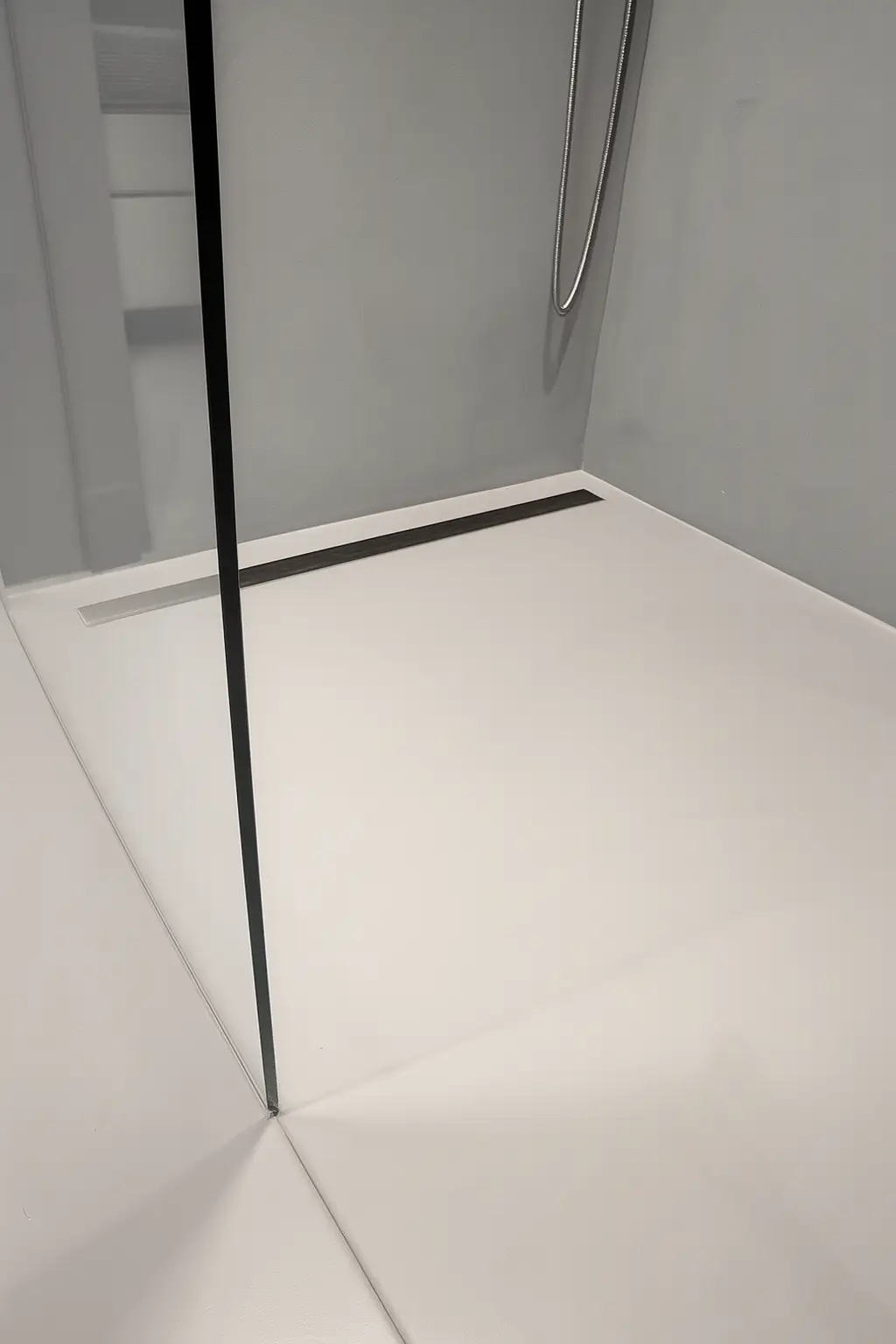
Lavasteen Seamless Floor
An epoxy resin floor with ground lava stone. Waterproof through the epoxy components themselves — even when damaged. Slip-resistant through the natural grain structure. For toilet floors the safest material, because the area around the toilet often has moisture.
20 standard colours. NCS and RAL on request (extra time for mixing and testing).
Why microcement on the wall, Lavasteen on the floor?
A toilet is a small wet room with the same challenges as a bathroom — only on a smaller scale. Splashes, condensation, daily use. The material choice therefore follows the same principle as in the bathroom: microcement on the wall (where nothing ever falls), Lavasteen on the floor (where something can fall).
No grout lines, yet calm in a small space
Toilets are often small — sometimes 1 to 2 square metres. Tiles with grout lines divide that space optically into even smaller pieces. A seamless microcement wall does the opposite: one continuous surface makes the space feel larger and calmer. The same shade from floor to ceiling amplifies that effect.
Why Lavasteen on the floor and not microcement?
Just as in the bathroom: on a floor something can fall (perfume bottle, door handle, tools). Microcement is mineral and becomes waterproof through the PU topcoat. If that topcoat is damaged, moisture can penetrate the mineral. Lavasteen is inherently waterproof (epoxy-based) and retains its waterproofing even when damaged. For a toilet floor where moisture is regularly present, that is the difference between years of satisfaction and consequential damage.
Or entirely in Lavasteen
A second option: Lavasteen on both floor and wall. The same paste, the same colour, one continuous surface. For the wall one coat of filling PU is applied. The result: a toilet that feels like one material — only the textural difference between floor and wall remains subtly visible.
Colour and light in a small toilet
Toilets often have little or no daylight. Dark shades can work beautifully (dramatic, intimate) but make the space visually smaller. Light shades keep the space open. We always recommend requesting colour samples to assess in your own lighting — LED spots colour differently than halogen or indirect light.
Other spaces
For other spaces with their own material choices:
- In the bathroom — the same combination on a larger scale
- In the living room — more choices because there is no water
- Overview all spaces — the right material for each space